

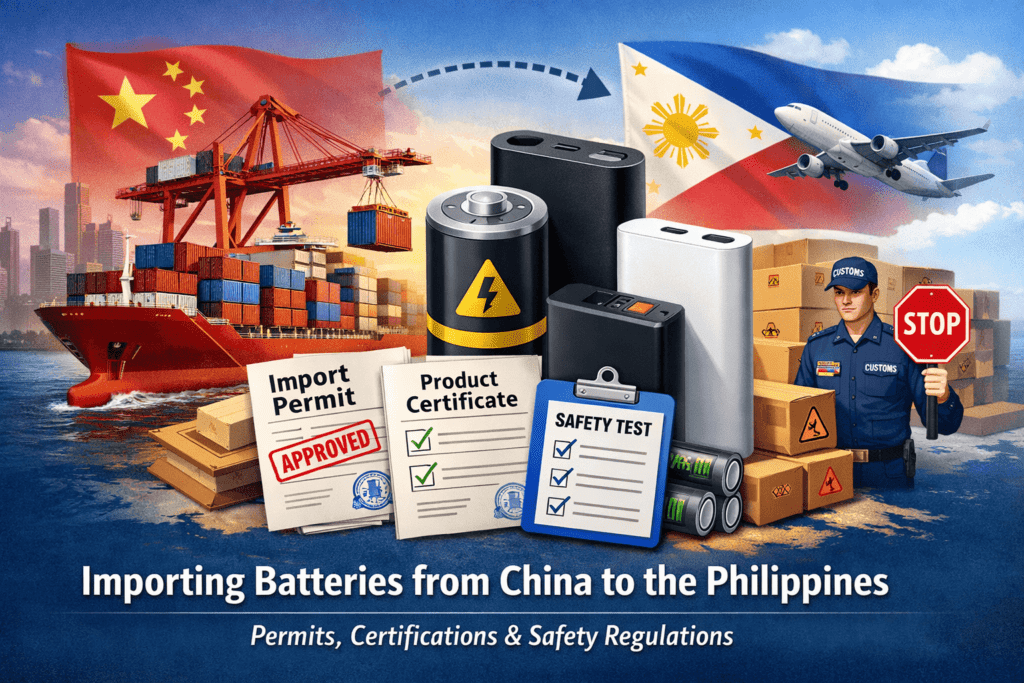
Many importers lose money because they don’t understand the regulations around battery products—especially lithium batteries. Don’t let this happen to you.
To legally import power banks and other batteries from China to the Philippines, you must prepare import permits, product certifications, and strictly follow safety and customs regulations.
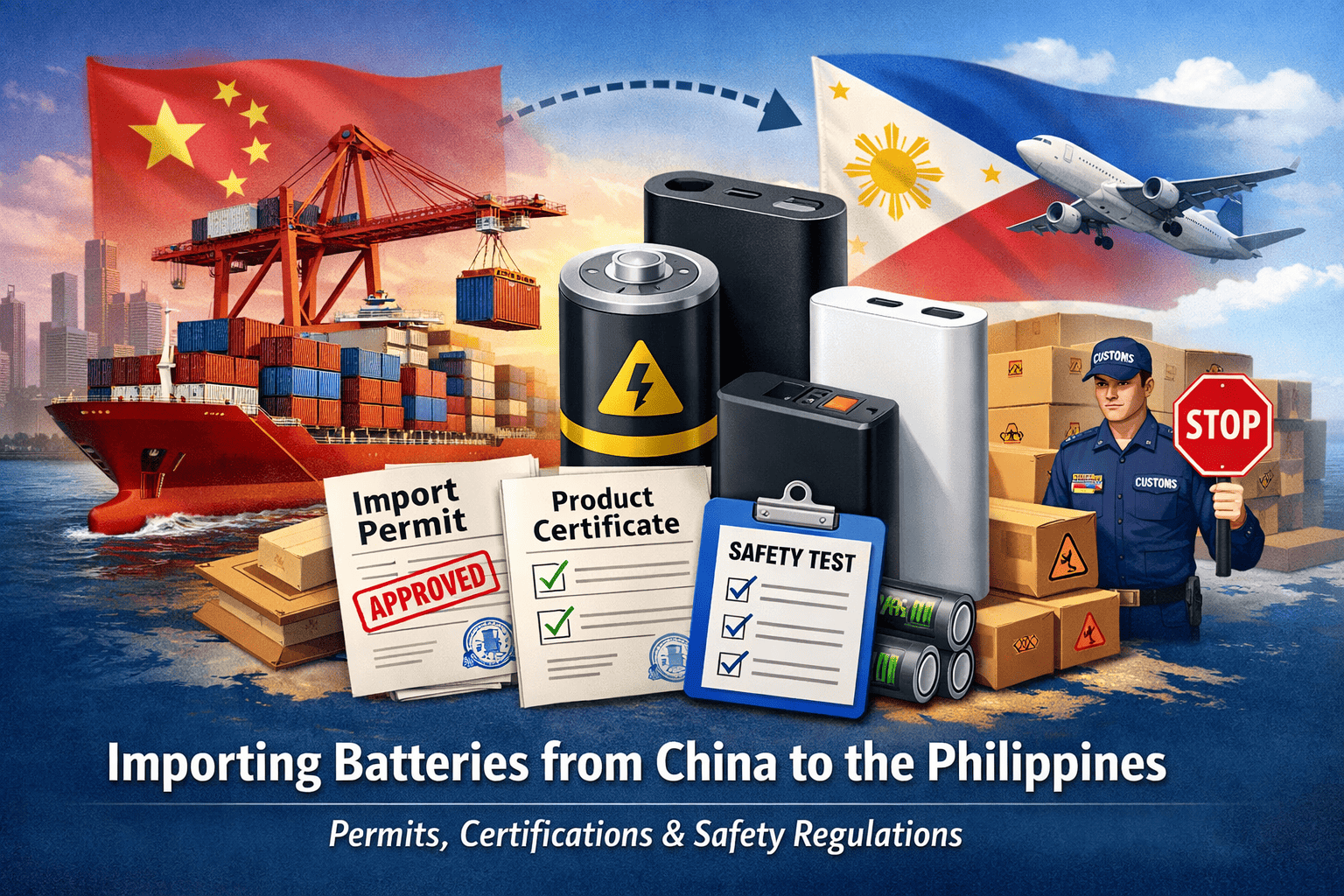
Battery products are not like general consumer goods. There are more documents, stricter inspections, and higher risks. But with the right preparation, this can be a profitable niche.
Do I need permits or licenses to import batteries into the Philippines?
Many first-time importers think batteries are just like any other electronics. That’s a dangerous assumption.
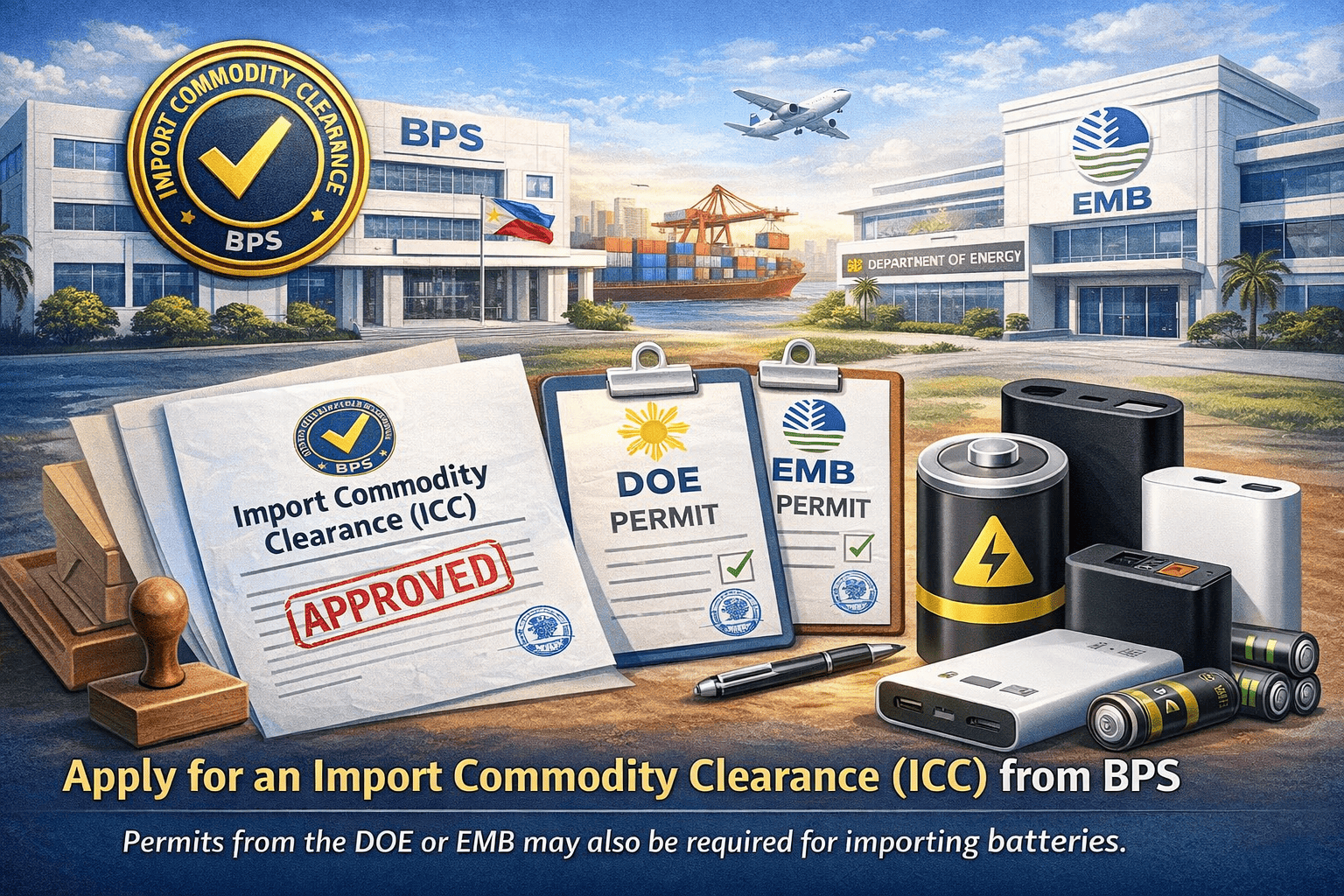
Yes, you will typically need to apply for an Import Commodity Clearance (ICC)1 from BPS, and sometimes permits from the Department of Energy (DOE)2 or the Environmental Management Bureau (EMB).
What documents do I need?
Here are the most common documents required for battery importation:
| Document | Issued By | Purpose |
|---|---|---|
| Import Commodity Clearance (ICC) | Bureau of Philippine Standards (BPS) | Proves the product meets PH safety standards |
| Certificate of Product Registration (CPR) | Department of Energy (DOE) | May be needed for rechargeable batteries |
| Environmental Compliance Certificate (ECC) | Environmental Management Bureau (EMB) | For large-volume or special batteries |
| UN38.3 & MSDS | Supplier or lab | Prove transport safety for lithium batteries |
If these documents are missing, your shipment can be delayed, fined, or even confiscated.
We once helped a client who had no import license but wanted to bring in household lithium batteries and phone batteries. We guided their Chinese supplier to provide valid UN38.3 test reports and MSDS, and ensured that export documents were filled out correctly under the supplier’s name. The packaging complied with the requirements of Dangerous Goods Packaging Certificate (危包证). We managed the full export process and handled customs clearance smoothly in Manila. If you need a similar service, we can help.
How do I comply with shipping and customs regulations for batteries?
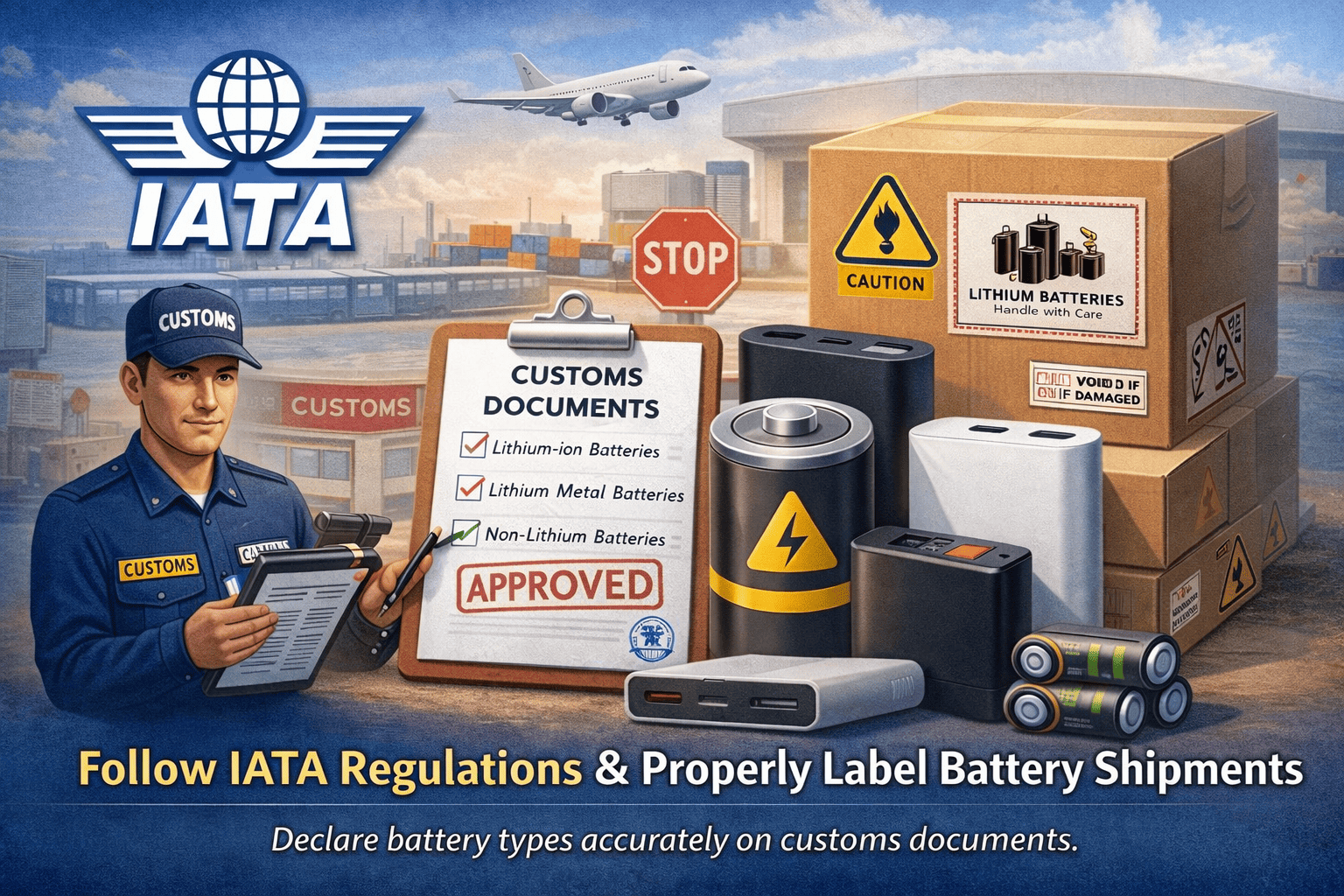
It’s not just about paperwork. Lithium batteries are strictly regulated in air freight as dangerous goods (DG)3.
You must follow IATA regulations4, use proper labels, and declare battery types accurately on customs documents.
What are the shipping rules?
Here’s the checklist we use for every battery shipment:
Battery Shipping Checklist
| Step | Action | Notes |
|---|---|---|
| 1 | Request UN38.3 Test Report | Verifies battery is safe for air transport |
| 2 | Get MSDS | Required for customs and airlines |
| 3 | Apply DG Labels | Such as "Lithium Ion Battery", "Handle With Care" |
| 4 | Book DG-compliant Forwarder | Not all freight forwarders accept lithium batteries |
| 5 | Use DDP Shipping | Prevents clearance delays at destination |
One common mistake is incorrect UN classification, which can cause major delays and extra cost.
For example, we had a client shipping electronic watches that contained built-in button-cell batteries. Their supplier incorrectly classified the battery as UN 3090 (lithium metal battery), which refers to standalone batteries.
But this product actually fell under UN 3091 (lithium metal battery contained in equipment).
Due to the wrong classification, customs treated the shipment as hazardous goods and required a DG packaging certificate and dangerous goods inspection. This caused delays and additional charges. We had to step in, correct the documents and resubmit everything to ensure proper clearance.
From our experience, many shipments that don’t technically require DG handling are treated as such because of incomplete or incorrect documents. This often leads to unnecessary testing fees and delays.
Also, remember that air and sea transport certification reports like the Dangerous Goods Declaration or packaging test reports all have a validity period—usually 1 year from the date of issue. If the documents are expired at the time of shipment, customs will reject them, and you’ll have to redo everything. This is a common but costly mistake.
This is why we always recommend working with a freight forwarder that has real experience handling lithium battery exports, and ensuring that the importer in the Philippines meets customs compliance requirements. That’s the only way to guarantee a smooth and cost-effective operation.
What safety certifications should I check with Chinese suppliers?
Buying cheap batteries from unqualified suppliers may result in customs issues, safety hazards, and serious damage to your brand.
Buying cheap batteries from unqualified suppliers may result in customs issues, safety hazards, and serious damage to your brand.
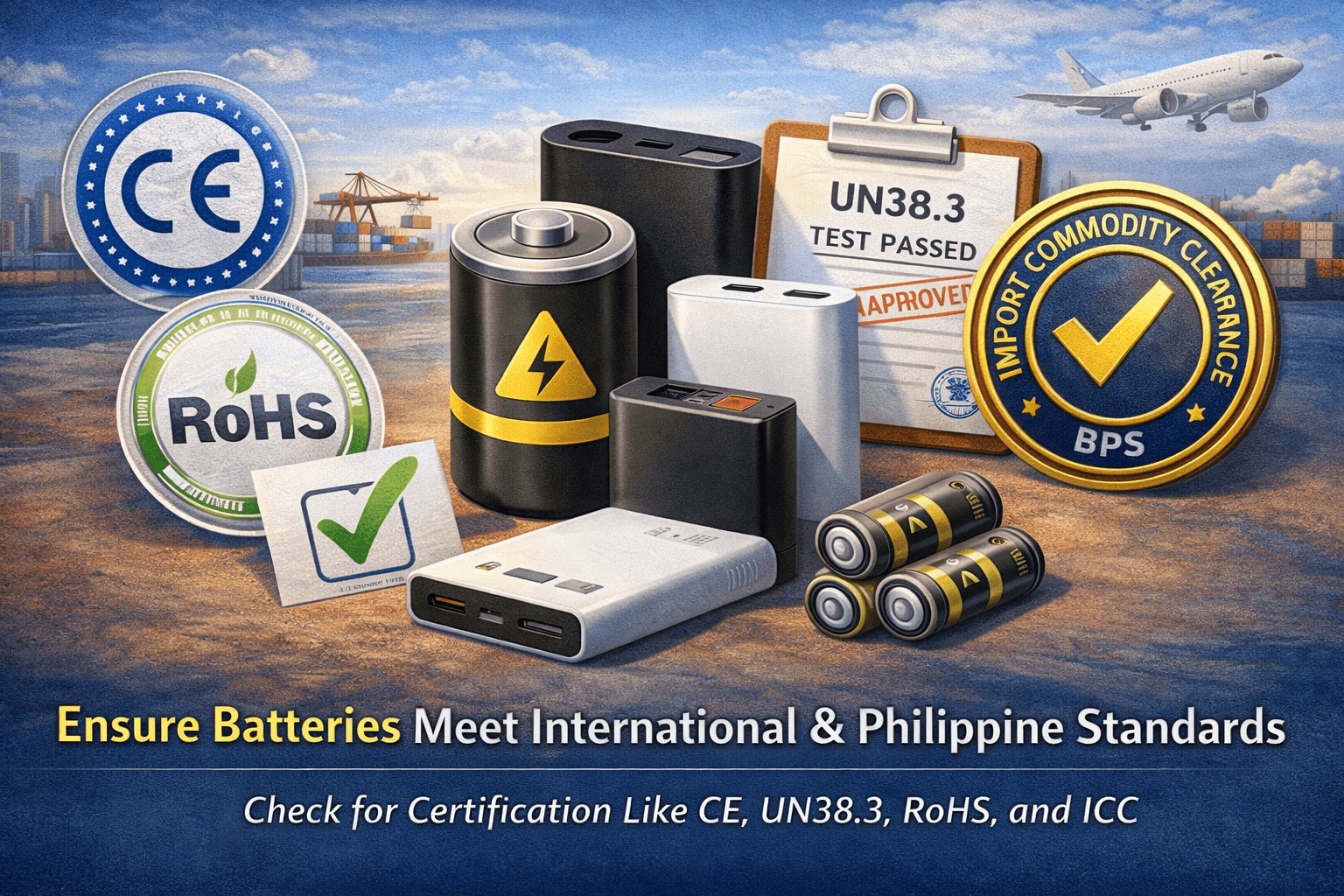
Before placing an order, make sure the battery meets both international and Philippine standards5 like CE, UN38.3, RoHS, and ICC6.
What certifications should I ask for?
Don’t assume the supplier knows the export requirements. Many Chinese factories only produce for the domestic market unless you specifically ask for compliance.
Must-have battery certifications:
| Certificate | Why You Need It |
|---|---|
| UN38.3 | Required for air transport—confirms battery stability |
| MSDS | Safety data sheet showing contents and handling info |
| CE or FCC | Confirms electrical safety and EMC compliance |
| RoHS | Confirms no restricted toxic substances |
| ICC (PH) | Mandatory for importing into the Philippines |
Always ask for real test reports—not just a logo in the brochure. One time, I reviewed a supplier’s UN38.3 report and noticed it was issued under another company’s name. That’s a red flag.
For first-time orders, we also recommend third-party inspection in China or let us verify the documents before shipment.
Conclusion
Battery importation is not simple—but with a reliable export and customs team, it becomes a profitable and scalable business opportunity.
-
Understanding ICC is crucial for compliance in importing batteries, ensuring you avoid legal issues. ↩
-
Exploring the DOE’s regulations can help you navigate the complexities of importing energy-related products. ↩
-
Understanding the regulations for DG is crucial for safe and compliant air freight operations. ↩
-
Exploring IATA regulations will help ensure compliance and safety when shipping lithium batteries. ↩
-
Understanding these standards is crucial for compliance and safety when purchasing batteries. ↩
-
Exploring these certifications will help you ensure the quality and safety of the batteries you buy. ↩